
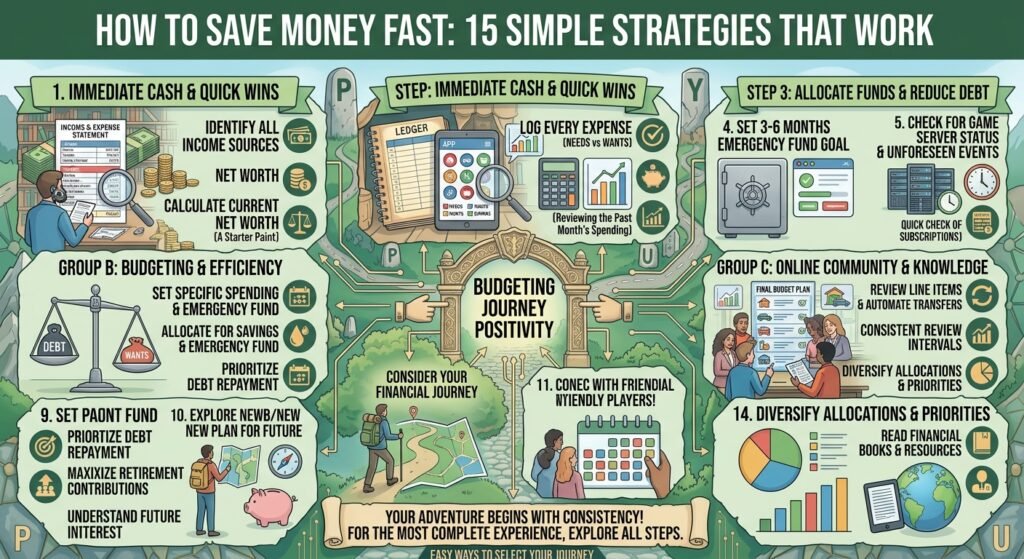
How to Save Money Fast: 15 Simple Strategies That Work
Saving money can feel difficult when everyday expenses keep increasing. Rent, groceries, transportation, subscriptions, utilities, debt payments, and unexpected expenses can quickly consume a large portion of your income. However, saving money does not always require earning a much higher salary. In many cases, making a few intentional changes to the way you spend, save, and manage your money can create meaningful results.
If your goal is to save money fast, the key is to focus on strategies that reduce unnecessary spending while making saving automatic and consistent. Small changes can add up surprisingly quickly when you repeat them every week or month.
In this guide, Monezaro explains 15 simple ways to save money fast without completely giving up the things you enjoy.
What Does It Mean to Save Money Fast?
Saving money fast means intentionally increasing the amount of money you can keep from each paycheck or monthly income. This usually involves reducing unnecessary expenses, finding cheaper alternatives, increasing income when possible, and automatically transferring money into savings.
The goal should not be to make your lifestyle miserable. Instead, effective saving is about identifying where your money is going and deciding which expenses actually provide value.
For example, cutting several small expenses—such as unused subscriptions, frequent restaurant meals, impulse purchases, and unnecessary fees—can potentially free up hundreds of dollars each month.
The faster you want to reach a savings goal, the more aggressive your approach may need to be. But even modest changes can make a significant difference when maintained over time.
1. Set a Specific Savings Goal
The first step toward saving money quickly is deciding exactly what you are saving for. A vague goal such as “I want to save more money” is difficult to measure and easy to ignore.
Instead, create a specific target. You might want to save $1,000 for an emergency fund, $3,000 for a vacation, $5,000 for a major purchase, or several months of living expenses.
Once you have a target, determine how much you need to save each month.
For example, if you want to save $2,400 within six months, you would need to save approximately $400 per month. Breaking a large goal into smaller monthly or weekly targets makes it easier to track your progress and stay motivated.
A clear goal also helps you decide which spending changes are worth making.
2. Track Every Dollar You Spend
You cannot effectively reduce your spending if you do not know where your money is going.
For at least 30 days, track your expenses carefully. Include everything from rent and utility bills to coffee, snacks, online purchases, entertainment, transportation, and subscription services.
You may be surprised by how much small purchases add up.
For example, spending $8 several times a week may not seem significant at the moment, but repeated purchases can become hundreds of dollars over a year.
Review your spending at the end of the month and divide expenses into categories such as housing, food, transportation, entertainment, debt, subscriptions, and miscellaneous purchases.
Once you understand your spending patterns, you can identify the easiest areas to reduce.
3. Create a Short-Term Spending Freeze
If you need to save money quickly, consider temporarily freezing certain types of spending.
A spending freeze does not mean you stop spending money on necessities. Instead, you temporarily avoid optional purchases such as new clothing, restaurant meals, entertainment purchases, unnecessary electronics, or online shopping.
Try a seven-day or 30-day spending challenge.
During the challenge, continue paying essential bills and buying necessary groceries, but avoid nonessential purchases.
This strategy can work particularly well because it creates an immediate barrier between you and impulse spending. It also gives you time to recognize which purchases are genuine needs and which are simply habits.
4. Cancel Unused Subscriptions
Subscriptions are one of the easiest expenses to overlook because many payments happen automatically.
Check your bank and credit card statements for recurring charges. Look for streaming services, fitness memberships, software subscriptions, premium apps, subscription boxes, cloud storage plans, and other recurring services.
Ask yourself whether you actually use each service.
If you are paying for several subscriptions you rarely use, canceling them can immediately reduce your monthly expenses.
You do not necessarily need to eliminate every subscription. Keep the services that provide genuine value and remove those that you rarely use.
Even saving $50 per month through subscription cuts would give you an additional $600 per year.
5. Reduce Restaurant and Takeout Spending
Food can become a major part of a household budget, particularly when restaurant meals, delivery fees, and takeout become regular habits.
One of the fastest ways to reduce food spending is to prepare more meals at home.
You do not need to cook complicated meals every day. Simple options such as rice bowls, pasta, sandwiches, soups, eggs, roasted vegetables, chicken, and homemade salads can be affordable and easy to prepare.
Create a weekly meal plan before going grocery shopping. This reduces the chance of buying unnecessary ingredients and makes it easier to avoid expensive last-minute takeout.
You can still enjoy restaurants occasionally. The objective is to make dining out an intentional choice rather than an automatic habit.
6. Use a Grocery List and Shop With a Plan
Grocery shopping without a plan can lead to unnecessary purchases.
Before going to the store, check what you already have at home. Then create a list based on the meals you plan to prepare during the week.
Try to avoid shopping when you are hungry because hunger can encourage impulse purchases.
Compare prices between brands and consider store-brand alternatives when their quality meets your needs.
You can also reduce food waste by planning meals around ingredients you already have.
Saving even $20 to $50 per grocery trip can make a noticeable difference over several months.
7. Use the 24-Hour Rule for Nonessential Purchases
Impulse purchases can quietly destroy a savings plan.
One simple strategy is to use a 24-hour waiting rule. Whenever you want to purchase something that is not necessary, wait at least one day before buying it.
For larger purchases, consider waiting several days or even a week.
This creates time between the initial desire and the actual purchase. In many cases, you may realize that you do not really need the item.
The strategy is especially useful for online shopping because websites and apps are designed to make purchasing extremely convenient.
Adding a waiting period gives you an opportunity to ask whether the purchase fits your budget and financial goals.
8. Lower Your Monthly Bills
Take a close look at your recurring household expenses and determine whether any can be reduced.
Review your internet, phone, insurance, utilities, and other regular bills. Contact providers and ask whether lower-cost plans are available.
You may also discover that you are paying for features or services you no longer need.
For example, switching to a lower-cost phone plan or eliminating unnecessary add-ons can reduce monthly expenses without significantly changing your lifestyle.
When reviewing insurance or financial products, make sure you understand what coverage or benefits you would lose before changing anything.
The objective is to reduce unnecessary costs, not simply choose the cheapest option regardless of your needs.
9. Try a No-Spend Weekend
A no-spend weekend can be a simple way to save money while becoming more aware of your spending habits.
For one weekend, avoid optional purchases. Instead of going to restaurants, shopping malls, movie theaters, or paid entertainment venues, look for free activities.
You might take a walk, visit a public park, organize your home, cook a meal, read, play games, exercise, or spend time with friends and family at home.
A single weekend will not transform your finances, but it can demonstrate how much money you normally spend on convenience and entertainment.
You may even discover inexpensive activities that you genuinely enjoy.
10. Sell Things You No Longer Need
One person’s unused item can become another person’s useful purchase.
Look around your home for clothing, electronics, furniture, appliances, tools, books, collectibles, or other items that you no longer use.
Selling these items can provide a quick source of extra cash.
Instead of spending the money immediately, transfer the proceeds directly into your savings account.
You can also use the opportunity to organize your home. Decluttering may make you more aware of how much money you have previously spent on things you rarely use.
Be realistic about what you sell, particularly if an item has practical value or could reasonably be needed in the future.
11. Automate Your Savings
One of the most effective ways to save money consistently is to automate the process.
Set up an automatic transfer from your checking account to a dedicated savings account after receiving your paycheck.
For example, you might automatically transfer $100, $250, or another amount that fits your budget.
Automation reduces the need to make a decision every month.
Instead of waiting to see what money remains at the end of the month, you save first and then manage your spending around what is left.
If your employer offers direct-deposit splitting, you may also be able to direct part of your paycheck into savings automatically.
12. Save Unexpected Money
Whenever you receive money that was not part of your normal monthly budget, consider saving at least part of it.
This could include a tax refund, work bonus, cash gift, freelance income, rebate, or money from selling unwanted items.
You do not necessarily need to save every dollar.
A useful approach is to divide unexpected money between saving, necessary expenses, debt reduction, and personal enjoyment.
For example, if you receive an unexpected $500, you might decide to put a significant portion toward your savings goal instead of allowing the entire amount to disappear into everyday spending.
Unexpected income can accelerate your progress because it does not require you to reduce your normal monthly necessities.
13. Find a Way to Earn Extra Income
Reducing expenses is only one side of saving money. Increasing income can also accelerate your progress.
Depending on your skills and schedule, you might consider freelance work, tutoring, selling products, consulting, weekend work, online services, or other legitimate income opportunities.
The important part is to avoid immediately increasing your lifestyle when your income rises.
If you earn an additional $300 per month and save most of it, your financial goals can progress much faster.
Even temporary extra income can be useful. You could dedicate additional earnings toward an emergency fund, debt repayment, or another specific financial goal.
14. Keep Savings Separate From Everyday Spending
It can be difficult to save money when your savings sit in the same account you use for daily purchases.
Consider keeping your savings in a separate account so that the money is less tempting to spend.
A dedicated savings account can create a psychological boundary between money intended for future goals and money available for everyday expenses.
For an emergency fund, consider keeping the money accessible enough for genuine emergencies while avoiding unnecessary withdrawals.
The specific account you choose should depend on your financial situation, goals, access needs, and applicable account terms.
15. Give Every Dollar a Job
One of the strongest money-saving habits is deciding what your income should accomplish before you spend it.
Instead of thinking about your money as one large balance, assign portions of your income to specific purposes.
For example, your monthly income might be divided among:
- Housing
- Utilities
- Groceries
- Transportation
- Debt payments
- Emergency savings
- Retirement
- Other financial goals
- Entertainment
- Personal spending
This approach is sometimes called zero-based budgeting when your planned income minus planned expenses and savings equals zero.
The objective is not to spend every dollar. Savings and investments can also be given a “job.”
When your money has a purpose, it becomes easier to resist unnecessary purchases because you understand what you would be giving up.
How to Save Money Fast on a Low Income
Saving money can be more challenging when your income is limited because essential expenses may already consume most of your paycheck. However, the same basic principles still apply.
Start by focusing on the expenses you can actually control. Review subscriptions, food spending, transportation, entertainment, shopping, and recurring bills.
At the same time, look for opportunities to increase income. Even a small additional income stream can create room in a tight budget.
Most importantly, avoid comparing your savings progress with someone else’s. Saving $25 per month may seem small, but developing the habit is valuable.
As your income increases, you can gradually increase the amount you save.
A Simple Fast-Saving Plan
If you want to start immediately, use this simple seven-step plan:
Step 1: Choose one specific savings goal.
Step 2: Review the last 30 days of spending.
Step 3: Cancel unnecessary subscriptions.
Step 4: Reduce restaurant, takeout, and impulse spending.
Step 5: Set up an automatic savings transfer.
Step 6: Put unexpected income directly toward your savings goal.
Step 7: Review your progress every week.
The goal is not perfection. The goal is consistency.
Common Mistakes That Can Slow Down Your Savings
Saving money aggressively can sometimes create unrealistic expectations. One common mistake is cutting so many expenses that the budget becomes impossible to maintain.
Another mistake is relying entirely on willpower. Automation is usually more reliable than trying to remember to save at the end of every month.
Some people also focus only on small expenses while ignoring large financial costs such as housing, transportation, insurance, or high-interest debt.
Finally, avoid using savings as an excuse to take on new debt. If you make a purchase you cannot afford simply because you are trying to save aggressively elsewhere, your overall financial position may not improve.
A sustainable savings plan should fit your actual income, expenses, responsibilities, and financial goals.
How Long Does It Take to Save Money Fast?
The answer depends on your income, expenses, savings rate, and goal.
For example, someone who can save $500 per month will reach a $2,000 goal in about four months, assuming there are no withdrawals or other changes.
Someone who can save $200 per month would need approximately ten months to reach the same target.
Rather than focusing only on speed, focus on your savings rate and consistency.
If you continually increase the amount you save as your financial situation improves, your progress can accelerate over time.
Final Thoughts
Learning how to save money fast does not require completely changing your lifestyle. It starts with understanding where your money goes, identifying unnecessary expenses, and creating a clear plan for your income.
The 15 strategies in this guide can help you reduce spending, increase savings, and move toward your financial goals more efficiently. Start with the strategies that are easiest for you to implement, such as canceling unused subscriptions, planning meals, tracking expenses, using a spending freeze, and automating savings.
Once these habits become normal, look for additional opportunities to reduce major expenses and increase income.
Remember that personal finance is not about being perfect. It is about making better financial decisions consistently.
With a clear goal, realistic budget, and disciplined approach, even small amounts of money saved regularly can become an important part of your long-term financial plan.
Frequently Asked Questions
What is the fastest way to save money?
The fastest approach is usually a combination of reducing unnecessary expenses, temporarily limiting discretionary spending, automating savings, and increasing income where possible. Focusing on several strategies at the same time can produce faster results than relying on one change.
How can I save $1,000 quickly?
Start by calculating how much you can realistically save each week or month. Review your largest discretionary expenses, cancel unused subscriptions, reduce dining and shopping, sell unused items, and direct extra income toward the goal. The exact timeline depends on your income and expenses.
How much money should I save each month?
There is no single amount that works for everyone. A useful starting point is to choose an amount that fits your budget and gradually increase it as your financial situation improves. Building an emergency fund and saving consistently are generally more important than choosing an arbitrary number.
Should I save money or pay off debt first?
It depends on the type of debt, interest rate, emergency savings, and your overall financial situation. Many people benefit from maintaining some emergency savings while prioritizing high-interest debt. Consider your circumstances carefully before choosing a strategy.
How can I stop spending money unnecessarily?
Start by identifying your spending triggers. Use strategies such as a 24-hour waiting period, removing saved payment information from shopping websites, unsubscribing from promotional emails, creating a shopping list, and setting specific spending limits.
SEO Information
SEO Title: How to Save Money Fast: 15 Simple Strategies That Work | Monezaro
Meta Description: Learn how to save money fast with 15 simple strategies. Discover practical ways to cut expenses, increase savings, control spending, and reach your financial goals faster.
Primary Keyword: how to save money fast
Secondary Keywords:
- how to save money
- ways to save money fast
- money saving tips
- how to save money quickly
- saving money tips
- how to cut expenses
- how to reduce spending
- personal finance tips
- budgeting tips
- how to build savings
- saving money for beginners
- financial goals
- how to save $1,000
Suggested URL Slug: /how-to-save-money-fast/
Category: Saving Money
Tags: Saving Money, Personal Finance, Budgeting, Money Management, Financial Goals, Frugal Living, Saving Tips
Search Intent: Informational
Target Audience: U.S. adults, beginners, young professionals, families, and anyone looking for practical ways to reduce expenses and increase savings.
Suggested Internal Links:
- Personal Finance for Beginners: A Complete Guide to Managing Your Money
- How to Create a Monthly Budget That Actually Works
- How to Build an Emergency Fund From Scratch
- Investing for Beginners: How to Start Investing With Little Money
- How to Pay Off Debt Faster: Smart Strategies to Become Debt-Free