
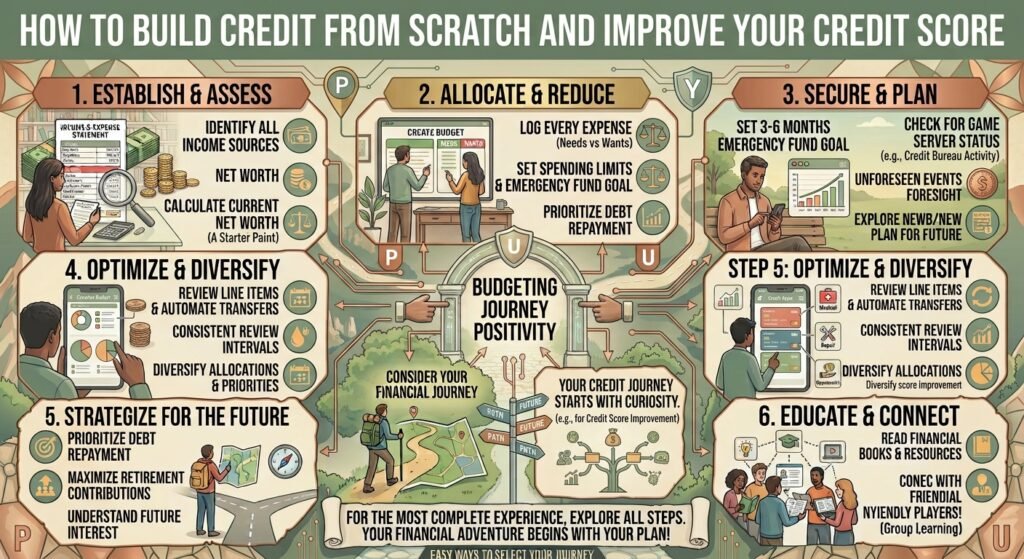
How to Build Credit From Scratch and Improve Your Credit Score
Building credit from scratch can feel confusing, especially if you have never had a credit card, loan, or other account that reports to the credit bureaus. However, establishing a strong credit history does not have to be complicated. With responsible borrowing, consistent payments, and good money-management habits, you can gradually build a positive credit profile and improve your credit score over time.
Your credit score can influence many parts of your financial life. Lenders may use it when evaluating applications for credit cards, auto loans, mortgages, and personal loans. In some situations, your credit history can also matter when applying for an apartment or certain financial products. A stronger credit profile can potentially make it easier to qualify for credit and may help you receive more favorable terms.
At Monezaro, our goal is to make personal finance easier to understand. In this guide, you will learn how credit works, how to build credit from scratch, how to improve your credit score, which mistakes to avoid, and how to maintain healthy credit for the long term.
What Is a Credit Score?
A credit score is a numerical representation of information in your credit history. In the United States, FICO Scores and VantageScore are two commonly used credit-scoring systems. Credit scores are generally calculated using information from your credit reports, including payment history, balances, credit limits, account age, and other factors.
Scores can vary depending on the scoring model and the information being evaluated. That means there is not always one single credit score attached to your name.
The most important lesson for beginners is that building credit is not about finding a shortcut to a high score. It is about creating a reliable pattern of responsible financial behavior.
When lenders see a history of paying accounts on time and managing borrowed money responsibly, that history can help demonstrate that you are a lower-risk borrower.
Why Is Good Credit Important?
Good credit can be valuable because borrowing money is often part of major financial decisions. You may eventually want to finance a vehicle, apply for a mortgage, obtain a rewards credit card, or use another type of credit.
A stronger credit profile may improve your chances of approval and can sometimes help you qualify for better interest rates or terms. Even a small difference in an interest rate can become significant when borrowing a large amount of money over several years.
For example, someone purchasing a home may pay interest on a mortgage for decades. Someone financing a vehicle may make payments for several years. Maintaining healthy credit before these major decisions can therefore be an important part of long-term financial planning.
However, your credit score should not become the only measure of financial success. A high score does not automatically mean that someone manages money well. You can have an excellent score while carrying expensive debt, so credit building should always be combined with budgeting, saving, and responsible debt management.
How to Build Credit From Scratch
If you have little or no credit history, start with simple financial products and focus on creating a consistent record of responsible behavior.
1. Check Whether You Already Have a Credit History
Before applying for new credit, find out whether you actually have a credit history.
Some people assume they have no credit because they have never had a credit card, but they may already have information appearing on one or more credit reports.
Checking your credit reports can help you understand what information is already associated with your credit profile. It can also help you identify inaccurate information or accounts you do not recognize.
If you discover an error, investigate the dispute process with the appropriate credit bureau or creditor rather than ignoring it.
Knowing where you currently stand gives you a better starting point.
2. Consider a Secured Credit Card
A secured credit card can be one option for people who are trying to establish or rebuild credit.
Unlike a traditional unsecured credit card, a secured card typically requires a refundable security deposit. Depending on the card, the deposit may determine the credit limit.
For example, if a card requires a $300 security deposit, the account might provide a $300 credit limit, although terms vary by issuer.
The important thing is to choose a secured card that reports account activity to the major credit bureaus. Reporting is essential because an account generally cannot help build your credit history if its activity is not reported to the bureaus that maintain your reports.
Use the card for manageable purchases and pay the bill on time.
3. Become an Authorized User
Another potential way to establish credit is becoming an authorized user on someone else’s credit card.
An authorized user can receive a card connected to another person’s account, but the primary cardholder remains responsible for the account.
If the issuer reports authorized-user activity and the account has a positive history, it may help the authorized user’s credit profile. However, this depends on the issuer, the credit-reporting practices, and the scoring model.
This strategy also requires trust.
If the primary cardholder regularly misses payments or carries high balances, the account could potentially have an undesirable effect rather than helping.
For that reason, only consider becoming an authorized user on an account that is managed responsibly.
4. Apply for a Credit-Building Product
Some financial institutions offer products specifically designed to help people establish credit.
One example is a credit-builder loan. With this type of product, the money may be held in a savings account while you make scheduled payments. After the loan is completed, the funds are generally released according to the product’s terms.
The purpose is not simply to borrow money. The goal is to create a record of on-time payments.
Before using any credit-building product, carefully review the fees, interest, reporting practices, and total cost.
You should never take on unnecessary debt simply to increase your credit score.
5. Always Pay Your Bills on Time
Payment history is one of the most important parts of many credit-scoring models.
A late payment can hurt your credit profile, particularly when it becomes seriously delinquent and is reported to the credit bureaus.
The easiest way to protect your payment history is to create a system that makes missed payments less likely.
You can set up automatic payments, calendar reminders, or alerts from your financial institution. If possible, paying the statement balance in full can help you avoid carrying credit card debt and potentially reduce interest charges.
Remember that a credit card is not free money. Every purchase should fit within your actual budget.
6. Keep Credit Card Balances Under Control
Credit utilization refers to how much of your available revolving credit you are using.
For example, suppose your credit card has a $1,000 limit and your reported balance is $300. Your utilization on that card would be 30%.
Lower utilization is generally viewed more favorably by many scoring models than very high utilization.
You do not need to carry a balance to build credit. In fact, carrying a balance from month to month can result in interest charges.
A better approach is to use credit cards for purchases you can afford and pay the balance according to your financial plan.
7. Avoid Maxing Out Your Credit Cards
Using nearly your entire credit limit can make your credit utilization appear high.
For example, a $900 balance on a card with a $1,000 limit represents 90% utilization. Even if you make your payment on time, a high reported balance can negatively affect some credit scores.
If your spending regularly pushes your card close to its limit, consider reducing discretionary spending rather than simply requesting more credit.
Increasing your credit limit can sometimes reduce utilization if your spending remains unchanged, but you should never request or accept additional credit simply to spend more.
8. Do Not Apply for Too Many Accounts at Once
When you are starting to build credit, it can be tempting to apply for multiple credit cards.
This is usually unnecessary.
Credit applications can result in hard inquiries, depending on the product and lender. Multiple applications over a short period may also signal increased credit-seeking behavior to some lenders or scoring systems.
Instead of opening several accounts at once, focus on establishing one or two accounts that fit your financial situation.
Quality and responsible management are more important than the number of cards in your wallet.
9. Keep Your Old Accounts Open When Appropriate
The age of your credit accounts can contribute to your overall credit profile.
Closing an older credit card may reduce your available credit and can affect the way your credit history is evaluated over time.
However, this does not mean you should keep every account forever.
If a card has a high annual fee, poor terms, or creates financial temptation, closing it may make sense depending on your situation.
Before closing an account, consider how it could affect your available credit, utilization, fees, and overall financial plan.
10. Build a Consistent Payment History
Credit building is a long-term process.
One or two months of responsible behavior will not instantly create an exceptional credit profile. Instead, your goal should be consistency.
Pay your accounts on time month after month. Keep balances manageable. Avoid unnecessary applications. Monitor your reports and correct errors when necessary.
Over time, these habits can create a stronger credit history.
Think of credit building like building a financial reputation. Every responsible payment adds another piece to that history.
How to Improve Your Credit Score
If you already have credit but want to improve your score, the basic principles remain similar.
1. Review Your Credit Reports
Start by reviewing your credit reports for accuracy.
Look for accounts that do not belong to you, incorrect balances, inaccurate payment information, or outdated information that may need investigation.
You should regularly monitor your credit profile because mistakes can happen.
If you find inaccurate information, follow the appropriate dispute procedures provided by the credit bureau and creditor.
2. Pay Down High Credit Card Balances
If your credit cards have high balances, reducing them can be one of the most practical steps you can take.
Start by reviewing your budget and determining how much extra money you can safely put toward your balances.
You could focus on the card with the highest interest rate first while making required payments on other accounts. This approach can reduce the amount of interest you pay over time.
Another strategy is to prioritize the smallest balance for psychological motivation.
The best method is the one you can consistently follow without creating new debt elsewhere.
3. Never Miss a Payment
A single missed payment can create financial problems beyond your credit score.
Late fees and interest charges can make debt more expensive, while serious delinquencies can damage your credit history.
Set up reminders or automatic payments to reduce the risk of forgetting a due date.
If you are struggling to make a payment, contact the creditor before the account becomes seriously delinquent. Depending on the situation, the creditor may have options available.
4. Be Careful With New Credit
Before applying for a new credit card or loan, ask yourself why you need it.
If the purpose is simply to increase your credit score, there may be better strategies.
A new account can affect your credit profile through factors such as hard inquiries, account age, and changes in available credit.
Apply for credit when it serves a genuine financial purpose and when you can comfortably manage the payments.
5. Maintain a Healthy Credit Mix
Credit scoring models can consider the different types of credit you have managed.
For example, your credit history could contain revolving accounts such as credit cards and installment accounts such as certain loans.
However, you should never take out a loan simply to create a better credit mix.
The potential benefit is generally not worth paying interest on unnecessary debt.
Instead, allow your credit mix to develop naturally as your financial needs change.
6. Give Your Credit History Time
There is no legitimate method that can instantly create a long, positive credit history.
Time matters.
If you consistently pay your accounts on time and manage your credit responsibly, your history can gradually become stronger.
This is why starting early can be useful. Even a simple credit account managed responsibly for several years can contribute to a more established credit profile.
How Long Does It Take to Build Credit From Scratch?
Building credit takes time, and there is no universal timeline for reaching a particular score.
Your progress depends on factors such as the accounts you have, whether they report to the credit bureaus, payment history, balances, credit age, and the scoring model being used.
Someone who opens a credit account and manages it responsibly may begin generating credit history relatively quickly, but developing a strong and established profile generally takes longer.
The key is to focus less on how quickly your score changes and more on creating habits that will remain useful for years.
What Is a Good Credit Score?
The definition of a “good” credit score depends on the scoring model being used.
For example, FICO Scores and VantageScore use different scoring ranges and criteria. Lenders can also have their own approval standards.
Rather than obsessing over a single number, focus on the underlying behaviors that support healthy credit:
- Paying bills on time
- Keeping revolving balances manageable
- Avoiding unnecessary debt
- Limiting excessive credit applications
- Maintaining accounts responsibly
- Monitoring credit reports
- Correcting inaccurate information
A strong credit score is generally the result of good financial habits rather than a separate financial goal.
Common Credit-Building Mistakes to Avoid
Mistake 1: Carrying a Balance Just to Build Credit
You do not generally need to pay interest to build credit.
Using a credit card responsibly and paying the required amount on time is what matters for payment history. If you can afford to pay your statement balance in full, doing so can help you avoid unnecessary interest costs.
Mistake 2: Spending More Because You Have a Higher Limit
A larger credit limit does not mean you have more money.
Credit is borrowed money that must eventually be repaid.
If your credit limit increases, keep your spending based on your income and budget rather than the amount the lender allows you to borrow.
Mistake 3: Opening Too Many Credit Cards
Having multiple credit cards is not automatically bad, but opening several accounts quickly can make your finances harder to manage.
For beginners, simplicity can be an advantage.
Start with an account you understand and manage it responsibly before considering additional credit.
Mistake 4: Ignoring Credit Reports
Some people only think about credit when applying for a loan.
That can be a mistake.
Monitoring your credit reports can help you identify errors and understand how your financial behavior is being reported.
Mistake 5: Closing Accounts Without Considering the Consequences
Closing an account may affect available credit and other aspects of your credit profile.
Always consider the financial consequences before closing a credit card.
A Simple Credit-Building Plan for Beginners
If you are starting from zero, you do not need a complicated strategy.
Follow a simple system:
Step 1: Check your credit reports and understand your starting point.
Step 2: Choose a credit-building option that fits your situation, such as a secured credit card or another appropriate product.
Step 3: Use a small portion of your available credit for purchases you can afford.
Step 4: Pay your bills on time every month.
Step 5: Keep your balances manageable.
Step 6: Avoid unnecessary credit applications.
Step 7: Monitor your credit reports regularly.
Step 8: Continue these habits for the long term.
The goal is not to manipulate your score. The goal is to demonstrate responsible credit management consistently.
Credit Building and Your Overall Financial Plan
Credit should be only one part of your financial strategy.
If you are working toward financial stability, combine credit-building habits with a realistic monthly budget, emergency savings, debt repayment, and long-term investing.
For example, building credit while simultaneously creating an emergency fund can give you greater financial flexibility. If an unexpected expense occurs, having savings may reduce the need to rely heavily on a credit card.
Likewise, paying down high-interest debt can improve your overall financial position even if your credit score is not immediately affected.
Your financial health is bigger than a three-digit number.
Final Thoughts
Learning how to build credit from scratch is an important step toward becoming more financially independent. The process does not require complicated tricks or risky borrowing. Instead, it depends on consistent habits such as making payments on time, keeping credit card balances under control, limiting unnecessary applications, monitoring your credit reports, and using borrowed money responsibly.
If your credit history is currently limited or your score is lower than you want, do not become discouraged. Credit can change over time as new information is added to your reports and older information becomes less influential.
The most effective approach is to build a system you can maintain for years.
At Monezaro, we believe better financial decisions start with better financial knowledge. Whether you are building credit, creating a budget, saving for emergencies, paying down debt, or beginning your investment journey, small responsible decisions can contribute to stronger long-term financial habits.
Frequently Asked Questions
How can I build credit if I have no credit history?
You can consider options such as a secured credit card, becoming an authorized user on a responsibly managed account, or using an appropriate credit-building product. Make sure the account reports to relevant credit bureaus before relying on it to establish credit history.
How fast can I improve my credit score?
There is no guaranteed timeline. Improvement depends on your credit history, the factors affecting your score, and the scoring model used. Consistent on-time payments and responsible credit utilization can help create healthier credit behavior over time.
Do I need to carry a credit card balance to build credit?
No. Carrying a balance and paying interest is generally not necessary simply to build credit. Responsible use and timely payments are more important.
Is a secured credit card good for beginners?
A secured credit card can be a useful option for people who are new to credit or rebuilding their credit. Compare fees, interest rates, security deposit requirements, and whether the issuer reports activity to the major credit bureaus.
Does checking my own credit hurt my credit score?
Checking your own credit information through a soft inquiry generally does not have the same effect as a hard inquiry from a lender when you apply for credit.
Should I close my first credit card?
Not necessarily. An older account may be useful to your credit profile, but keeping it open is not always the right choice if it has expensive fees or causes financial problems. Consider the account’s costs and how closing it could affect your overall credit profile.
What is the most important credit-building habit?
For most beginners, consistently paying credit obligations on time is one of the most important habits to develop. Combine timely payments with responsible balances and careful borrowing.
SEO Information
SEO Title: How to Build Credit From Scratch and Improve Your Credit Score | Monezaro
Meta Description: Learn how to build credit from scratch and improve your credit score with practical tips for beginners, including secured cards, on-time payments, credit utilization, and smart credit management.
Primary Keyword: how to build credit from scratch
Secondary Keywords:
- how to improve your credit score
- build credit fast
- credit building tips
- how to build credit
- improve credit score
- credit score for beginners
- how to establish credit
- build credit with no credit history
- secured credit card
- credit utilization
- credit history
- how to get good credit
- credit tips for beginners
- personal finance tips
- money management
Suggested URL Slug: /how-to-build-credit-from-scratch/
Category: Credit & Debt
Tags: Credit Score, Building Credit, Personal Finance, Credit Cards, Debt Management, Money Management, Financial Planning, Credit Tips
Search Intent: Informational
Target Audience: U.S. adults, young professionals, students, beginners with no credit history, and people looking to improve their credit score.
Suggested Internal Links:
- Personal Finance for Beginners: A Complete Guide to Managing Your Money
- How to Create a Monthly Budget That Actually Works
- How to Save Money Fast: 15 Simple Strategies That Work
- How to Build an Emergency Fund From Scratch
- Investing for Beginners: How to Start Investing With Little Money
- How to Pay Off Debt Faster
- 50/30/20 Budget Rule Explained