
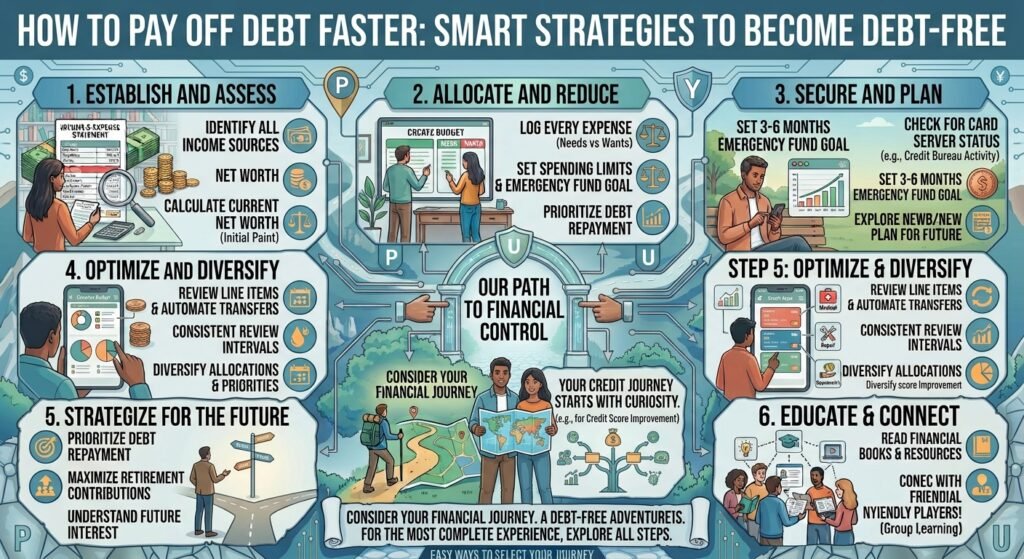
How to Pay Off Debt Faster: Smart Strategies to Become Debt-Free
Debt can make it difficult to feel financially secure. Whether you are dealing with credit card balances, personal loans, student loans, medical bills, or an auto loan, monthly payments can take a large portion of your income and make it harder to save for the future. The good news is that becoming debt-free is possible with a realistic strategy, consistent payments, and better control over your spending.
Paying off debt faster does not necessarily mean making extreme lifestyle changes or sending every dollar toward your balances. The most effective approach is to create a plan that fits your income, expenses, and financial goals. By understanding exactly what you owe, choosing a repayment strategy, reducing unnecessary expenses, increasing your income, and avoiding new debt, you can make meaningful progress toward financial freedom.
At Monezaro, we believe that understanding your money is the first step toward improving it. This guide explains how to pay off debt faster, which debt repayment methods you can use, how to stay motivated, and how to avoid common mistakes that can slow your progress.
Why Paying Off Debt Matters
Debt is not always bad. Some forms of borrowing can help you purchase a home, pay for education, or handle important expenses. The problem occurs when debt becomes difficult to manage or when high interest charges consume money that could otherwise be used for savings and investments.
High-interest debt, especially credit card debt, can grow quickly if you only make minimum payments. A portion of each payment may go toward interest rather than reducing the principal balance.
Paying off debt can therefore provide benefits beyond simply eliminating monthly bills. Once a debt is gone, the money you were using for payments can be redirected toward an emergency fund, retirement savings, investments, or other financial goals.
Becoming debt-free can also reduce financial stress and give you greater control over your monthly income.
How to Pay Off Debt Faster
1. Calculate Exactly How Much Debt You Owe
Before creating a repayment plan, you need a complete picture of your debt.
Make a list of every debt you currently have. Include credit cards, personal loans, student loans, auto loans, medical debt, and any other outstanding balances.
For each account, record:
- Current balance
- Interest rate
- Minimum monthly payment
- Due date
- Loan term, if applicable
- Any fees or penalties
- Whether the interest rate is fixed or variable
Once everything is written down, you may discover that your debt situation is more manageable than it seemed.
For example, you might have three credit cards with different balances and interest rates. Seeing all three accounts together makes it easier to determine which debt deserves additional payments first.
Do not avoid looking at your debt because the numbers make you uncomfortable. Knowing the exact numbers gives you the information needed to create a solution.
2. Create a Debt Payoff Budget
Your regular monthly budget should include a specific amount for debt repayment.
Start by calculating your monthly take-home income. Then subtract essential expenses such as housing, utilities, food, transportation, insurance, and other necessary costs.
Next, review your discretionary spending.
Look for expenses that can temporarily be reduced while you focus on becoming debt-free. This could include restaurant meals, entertainment, subscriptions, shopping, or other nonessential purchases.
The goal is not to eliminate everything enjoyable from your life. Instead, create a temporary spending strategy that gives you more money to direct toward your debt.
Even an additional $100 or $200 per month can make a meaningful difference when applied consistently.
3. Choose the Debt Snowball Method
The debt snowball method focuses on paying off your smallest debt first.
You continue making the minimum required payments on all your debts while putting extra money toward the account with the smallest balance.
Once that debt is completely paid off, you take the money you were using for that payment and add it to the next debt.
For example:
- Credit Card A: $500
- Credit Card B: $1,500
- Personal Loan: $4,000
You would focus your extra money on the $500 credit card first.
After eliminating it, you redirect that payment toward the $1,500 balance.
The major advantage of the snowball method is psychological motivation. Paying off an entire account can provide a sense of accomplishment and make it easier to continue.
4. Consider the Debt Avalanche Method
The debt avalanche method focuses on interest rates instead of balances.
With this strategy, you make minimum payments on all debts while putting extra money toward the debt with the highest interest rate.
Suppose you have:
- Credit Card A: $2,000 at 25% APR
- Credit Card B: $1,000 at 18% APR
- Personal Loan: $5,000 at 10% APR
Under the avalanche method, you would generally prioritize Credit Card A because it has the highest interest rate.
After paying it off, you move to the next-highest-rate debt.
The avalanche method can reduce interest costs and potentially help you become debt-free faster mathematically.
However, it can take longer to eliminate your first account if the highest-interest debt also has a large balance.
5. Decide Which Repayment Strategy Fits You
There is no requirement to use one specific debt repayment method.
The snowball method can be useful if motivation and quick wins are important to you.
The avalanche method may be more attractive if minimizing interest costs is your priority.
The best method is the one you can follow consistently.
A theoretically perfect strategy is not useful if you abandon it after a few weeks. Choose a system that matches your personality, financial situation, and ability to stay disciplined.
6. Pay More Than the Minimum
Minimum payments can keep an account current, but they may not eliminate debt quickly.
When you have extra money available, consider making additional payments toward your target debt.
For example, if your minimum payment is $75 but your budget allows you to pay $175, the additional $100 can accelerate your progress.
Before making extra payments on loans, check the terms of your agreement to understand how additional payments are applied and whether any prepayment penalties exist.
With revolving credit card debt, reducing the balance can also help lower future interest charges because interest is generally based on the outstanding balance and applicable terms.
7. Stop Adding New Debt
Paying off debt while continuing to create new balances can make progress extremely difficult.
If you pay $500 toward a credit card but then charge another $400 of unnecessary purchases, your actual progress may be very small.
During your debt payoff period, try to use credit only when necessary and when you have a clear plan for repayment.
For some people, temporarily removing credit cards from their wallets or using cash or a debit card for everyday purchases can make spending easier to control.
The goal is to create a gap between the amount of debt you repay and the amount of new debt you create.
8. Cut Unnecessary Monthly Expenses
Reducing expenses can free up money for debt repayment.
Start with expenses that have little impact on your quality of life.
Review:
- Streaming subscriptions
- Restaurant spending
- Food delivery
- Unused memberships
- Online shopping
- Expensive phone plans
- Premium services
- Entertainment expenses
- Unnecessary recurring charges
You do not have to cut everything.
If eliminating a few expenses gives you an extra $200 per month, that $200 can become part of your debt payoff strategy.
Temporary sacrifices can be easier to manage when you give them a clear purpose and end goal.
9. Lower Your Monthly Bills
Some bills may be negotiable or reducible.
Review your insurance costs, phone plan, internet service, subscriptions, and other recurring expenses.
You may discover opportunities to switch plans, remove unnecessary features, negotiate certain services, or compare providers.
For example, reducing your recurring bills by $75 per month creates $900 of potential annual cash flow.
Instead of allowing that money to disappear into everyday spending, you can direct it toward your debt.
Small recurring savings can become powerful when maintained for several years.
10. Use Extra Income to Attack Your Debt
Reducing expenses is only one side of the equation. Increasing income can also accelerate debt repayment.
Depending on your situation, you might consider:
- Freelance work
- Part-time work
- Selling unused items
- Online services
- Overtime
- Seasonal work
- A side business
- Using professional skills for additional income
You do not necessarily need a permanent second job.
Even temporary additional income can make a difference.
For example, if you earn an extra $400 per month for six months and dedicate most of that money toward debt, you could potentially put thousands of additional dollars toward your balances.
Make sure any side-income plan is realistic and does not interfere with your primary job or essential responsibilities.
11. Sell Things You No Longer Need
Your home may contain items that you no longer use but could sell.
Look through clothing, electronics, furniture, tools, collectibles, sports equipment, and other possessions.
Selling unused items can create a one-time amount of money that you can apply directly to debt.
The advantage is that you are converting something you already own into cash without taking on another loan.
However, avoid selling items that you genuinely need or that would be expensive to replace.
12. Put Unexpected Money Toward Debt
Occasionally, you may receive money that was not included in your regular monthly budget.
Examples can include:
- Tax refunds
- Work bonuses
- Cash gifts
- Rebates
- Side-income payments
- Money from selling unwanted items
You do not necessarily have to put all unexpected money toward debt.
A balanced approach may involve dividing the money between debt repayment, emergency savings, and necessary expenses.
The important point is to avoid automatically spending unexpected money simply because it arrived.
13. Build a Small Emergency Fund While Paying Debt
It can be tempting to put every available dollar toward debt.
However, having no emergency savings can create a problem.
If your car breaks down or you experience another unexpected expense, you may have to use a credit card again.
A small emergency fund can provide some protection against these situations.
The exact amount depends on your circumstances, but the key is to create enough accessible savings to handle smaller unexpected expenses while continuing your debt repayment plan.
After high-interest debt is under control, you can work toward a larger emergency fund.
14. Use Windfalls Strategically
A financial windfall can provide an opportunity to make significant progress.
Suppose you receive a $2,000 bonus.
Instead of immediately increasing your lifestyle, consider using part of the money to reduce high-interest debt.
For example, you might allocate:
- $1,200 toward credit card debt
- $500 toward emergency savings
- $300 for a personal goal
The exact percentages are less important than having a deliberate plan.
A windfall can disappear quickly when it is spent without a purpose. Using it strategically can move your financial situation forward.
15. Consider a Balance Transfer Carefully
A balance transfer credit card may allow eligible borrowers to move debt from one credit card to another, sometimes with a promotional interest rate for a limited period.
This can potentially reduce interest costs and provide an opportunity to pay down principal faster.
However, balance transfers are not automatically beneficial.
You need to consider:
- Balance transfer fees
- Promotional period length
- Regular APR after the promotional period
- Eligibility requirements
- Whether you can realistically repay the balance before the promotional rate ends
A balance transfer can become counterproductive if you transfer debt but continue accumulating new balances.
Read the terms carefully before using this strategy.
16. Consider Debt Consolidation
Debt consolidation involves combining multiple debts into one new loan or credit product.
The potential advantage is simplicity. Instead of managing several payments, you may have one monthly payment.
Depending on the interest rate and fees, consolidation may also reduce the cost of the debt.
However, consolidation does not automatically eliminate debt.
You are still responsible for repaying the money.
Before consolidating, compare the new interest rate, fees, loan term, monthly payment, and total repayment amount with your existing debts.
A lower monthly payment may sometimes result from extending the repayment period, which can increase the total interest paid.
17. Avoid Payday Loans and High-Cost Borrowing
When you are struggling with debt, quick-cash products can appear attractive.
However, high-cost borrowing can make an already difficult financial situation worse.
Before taking out another loan, understand the total cost, interest rate, fees, repayment schedule, and consequences of missing payments.
If you are already overwhelmed by debt, consider contacting your creditors, a reputable nonprofit credit counseling organization, or another qualified financial resource rather than repeatedly borrowing to cover existing payments.
18. Automate Your Debt Payments
Automation can make your debt repayment plan easier to maintain.
Set up automatic payments for at least the required minimum amounts where appropriate.
This reduces the chance of forgetting a due date.
You can also schedule an additional payment toward your target debt after each paycheck.
Automation turns debt repayment into a routine rather than something you have to remember every month.
However, make sure your account contains enough money for scheduled payments so that you do not create overdraft problems.
19. Use the “Extra Payment” Strategy
One simple strategy is to make an extra debt payment whenever your normal budget allows it.
For example, if you receive two regular paychecks each month but occasionally receive a third paycheck due to the calendar, you could direct some or all of that additional income toward your debt.
Similarly, you could use money saved from canceled subscriptions or reduced restaurant spending as an additional payment.
The key is to avoid treating these savings as extra spending money.
Give the money a specific job.
20. Avoid Lifestyle Inflation
As your income increases, it can be tempting to immediately increase your spending.
For example, someone receiving a $500 monthly raise might upgrade their car, eat at more expensive restaurants, or increase entertainment spending.
Instead, consider directing a portion of every income increase toward debt repayment.
This is especially powerful because you are not reducing your existing lifestyle. You are simply preventing new income from becoming new expenses.
Once your debt is gone, the same habit can help you increase savings and investments.
How to Pay Off Credit Card Debt Faster
Credit card debt deserves special attention because interest rates can be high.
Start by listing each card’s balance, interest rate, and minimum payment.
Then select either the snowball or avalanche strategy.
If you use the avalanche method, prioritize the card with the highest interest rate. If you use the snowball method, prioritize the smallest balance.
Stop unnecessary card spending while you work on repayment.
Whenever possible, pay more than the minimum and direct additional money toward your target account.
Most importantly, avoid using a paid-off card to immediately create another balance. Paying off a credit card is only a victory if you change the habits that created the debt.
How to Pay Off Debt on a Low Income
Paying off debt on a limited income can be challenging, but the basic strategy remains the same.
Start by protecting essential expenses such as housing, utilities, food, transportation, and necessary insurance.
Then review discretionary spending.
Look for realistic ways to reduce expenses without putting your basic needs at risk.
Next, consider opportunities to increase income. Even a small additional income stream can provide extra money for debt payments.
Do not compare your debt payoff speed to someone earning significantly more money.
Your goal is progress based on your own circumstances.
If your minimum debt payments are already difficult to afford, consider contacting creditors to discuss hardship options before missing payments.
How to Stay Motivated While Paying Off Debt
Debt repayment can take months or even years.
That means motivation matters.
Set smaller milestones rather than focusing only on the final debt-free date.
For example:
- First $500 paid off
- First account completely paid
- $1,000 total reduction
- 25% of debt eliminated
- Halfway point reached
- Final debt paid
You can also track your balances visually with a spreadsheet, chart, or debt tracker.
Seeing your balance decline can provide encouragement when progress feels slow.
Celebrate milestones responsibly without undoing your financial progress.
What to Do After You Become Debt-Free
Becoming debt-free is not the end of your financial journey.
Once a debt payment disappears from your budget, redirect that money toward your next financial goal.
You might increase your emergency fund, contribute more toward retirement, invest for long-term goals, or save for a major purchase.
For example, if you were paying $600 per month toward debt, continuing to save or invest that $600 can dramatically improve your financial position over time.
The most important thing is to avoid replacing old debt with new unnecessary debt.
Your debt-free lifestyle should become your new normal.
Simple Debt Payoff Example
Imagine someone has the following debts:
| Debt | Balance | Interest Rate | Minimum Payment |
|---|---|---|---|
| Credit Card A | $1,000 | 24% | $40 |
| Credit Card B | $2,500 | 19% | $75 |
| Personal Loan | $5,000 | 11% | $150 |
Their minimum payments total $265 per month.
Suppose they review their budget and find an additional $235 per month.
They could now dedicate approximately $500 per month to debt payments.
Using the debt avalanche method, they could prioritize the highest-interest credit card first while continuing minimum payments on the other accounts.
After the first debt is eliminated, the money previously directed toward that payment can be rolled into the next target.
This is sometimes called a debt payment snowball effect because each paid-off account can increase the amount available for the next debt.
Actual repayment times and interest savings will depend on the specific account terms, interest calculations, payment timing, and whether new charges are added.
Debt Payoff Checklist
Use this checklist to organize your debt-free journey:
- List every debt
- Record each interest rate
- Record every minimum payment
- Calculate your total debt
- Create a monthly budget
- Build a small emergency reserve
- Choose snowball or avalanche
- Stop unnecessary new borrowing
- Reduce discretionary expenses
- Look for ways to increase income
- Automate required payments
- Make extra payments when possible
- Track your progress
- Review your plan every month
- Redirect former debt payments toward savings after becoming debt-free
Final Thoughts
Learning how to pay off debt faster is less about finding one magical trick and more about creating a system that consistently moves your money in the right direction. Start by understanding exactly what you owe, create a realistic budget, choose a repayment method, and focus your extra money on one debt at a time.
The debt snowball can provide quick psychological wins, while the debt avalanche can help prioritize high-interest balances. You can also accelerate your progress by cutting unnecessary expenses, increasing your income, selling unused items, using unexpected money wisely, and avoiding new debt.
Remember that becoming debt-free is a process. You may not see dramatic changes every week, but consistent payments can add up over time.
Once your debt is gone, do not simply return to your old financial habits. Use the money that previously went toward debt to build emergency savings, invest for the future, and create greater financial flexibility.
At Monezaro, we believe financial freedom starts with practical decisions repeated consistently. Whether you are paying off credit cards, managing personal loans, or working toward becoming completely debt-free, every payment is a step toward greater control over your financial future.
Frequently Asked Questions
What is the fastest way to pay off debt?
The fastest approach depends on your individual debts and financial situation. Generally, paying more than the minimum, prioritizing high-interest debt, reducing unnecessary expenses, increasing income, and avoiding new debt can accelerate repayment.
Is the debt snowball or avalanche method better?
The avalanche method prioritizes the highest interest rate and can reduce interest costs, while the snowball method prioritizes the smallest balance and can provide faster psychological wins. Choose the strategy you are most likely to maintain consistently.
Should I save money while paying off debt?
In many situations, maintaining at least a modest emergency reserve can help prevent unexpected expenses from becoming new debt. The appropriate balance between savings and debt repayment depends on your circumstances, interest rates, income stability, and financial needs.
Should I pay off credit card debt before investing?
High-interest credit card debt can be expensive, so many people prioritize paying it down before making substantial taxable investments. However, individual circumstances differ, particularly when employer retirement-plan contributions include a company match.
Can debt consolidation help me become debt-free faster?
It can, depending on the interest rate, fees, repayment period, and your behavior after consolidation. Compare the total cost of the new debt with your existing accounts before making a decision.
How can I pay off debt if I have a low income?
Start by protecting essential expenses, creating a realistic budget, reducing discretionary spending where possible, and looking for ways to increase income. If minimum payments are becoming unaffordable, contact creditors before missing payments and consider seeking reputable financial counseling.
Should I use my savings to pay off debt?
It depends on your emergency needs, debt interest rates, income stability, and overall financial situation. Using every dollar of savings to eliminate debt can leave you vulnerable to unexpected expenses, potentially forcing you to borrow again.
How can I avoid getting into debt again?
Create a realistic budget, maintain emergency savings, control discretionary spending, avoid unnecessary borrowing, and use credit only for purchases you can reasonably afford to repay.
SEO Information
SEO Title: How to Pay Off Debt Faster: Smart Strategies to Become Debt-Free | Monezaro
Meta Description: Learn how to pay off debt faster with smart strategies including debt snowball, debt avalanche, budgeting, extra payments, expense reduction, and increasing income.
Primary Keyword: how to pay off debt faster
Secondary Keywords:
- how to become debt-free
- debt payoff strategies
- how to pay off debt
- debt snowball method
- debt avalanche method
- how to pay off credit card debt
- paying off debt fast
- debt-free journey
- debt repayment plan
- how to get out of debt
- how to reduce debt
- credit card debt payoff
- personal finance tips
- money management
- financial freedom
Suggested URL Slug: /how-to-pay-off-debt-faster/
Category: Credit & Debt
Tags: Debt Management, Paying Off Debt, Credit Card Debt, Personal Finance, Money Management, Budgeting, Debt-Free, Financial Freedom
Search Intent: Informational
Target Audience: U.S. adults, young professionals, families, students, beginners managing debt, and anyone looking for practical ways to become debt-free.
Suggested Internal Links:
- Personal Finance for Beginners: A Complete Guide to Managing Your Money
- How to Create a Monthly Budget That Actually Works
- How to Save Money Fast: 15 Simple Strategies That Work
- How to Build an Emergency Fund From Scratch
- How to Build Credit From Scratch and Improve Your Credit Score
- Investing for Beginners: How to Start Investing With Little Money
- 50/30/20 Budget Rule Explained: How to Manage Your Money Better